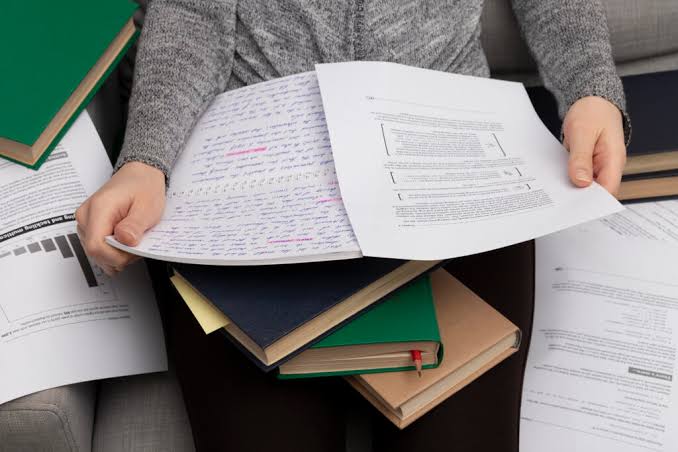
Most students who download a stack of past exam papers do the same thing with them: they solve one, check the answer key, feel a flicker of satisfaction or panic, and move on to the next one. After a few weeks, they’ve been through every paper they could find, and yet the actual score on test day looks almost identical to where they started. The papers weren’t the problem. The plan was.
A pile of exam papers is raw material, not a study plan. It becomes useful only when you treat it the way a researcher treats a dataset — something to be sorted, measured, and returned to on purpose, rather than something to be consumed once and set aside. The difference between a student who improves ten marks and one who plateaus usually isn’t how many papers they solved. It’s what they did with the information those papers were quietly handing them the whole time.
Start With a Question Map, Not a Page Count
Before solving a single paper, spend thirty minutes doing something that feels unproductive: read through five or six past papers without answering anything, and simply note what each question is actually testing. Not the topic in general, but the specific skill — is it asking you to recall a definition, apply a formula under a twist, compare two concepts, or interpret a diagram? Write these down in a simple list.
What you’ll notice almost immediately is that exam papers repeat themselves far more than students expect. The wording changes, the numbers change, sometimes the context changes, but the underlying skill being tested shows up again and again. A question map turns a stack of unrelated papers into a short list of skills you actually need to practice, which is a completely different, much smaller task than “get through all these papers.”
This step matters more for exams built from shared or community-sourced past papers, since these often span several years and multiple sources with no obvious pattern at first glance. Mapping the questions is what reveals the pattern that was there all along.
Turn Every Paper Into Three Piles
Once you start solving, resist the urge to file every paper away as simply “done.” Instead, after each attempt, sort the questions — not the whole paper — into three categories:
- Solved correctly and quickly. These need no further attention. Revisiting them wastes time you don’t have.
- Solved, but slowly or with hesitation. These reveal shaky foundations. You got there, but not efficiently, which usually means partial understanding rather than full mastery.
- Got wrong or skipped. These are your actual study list. Everything else is just confirmation of what you already know.
Most students spend equal time on all three piles because it feels thorough. It isn’t. The first pile deserves almost none of your remaining time. The second and third piles are where the marks you’re currently losing are hiding.
Building a Weekly Rotation Instead of a Random Order
Solving papers in the order you happened to download them is convenient, but it isn’t strategic. A better structure is a weekly rotation built around your question map from earlier. If your map showed five recurring skill categories, assign each day of your study week to one or two of them, and pull questions testing that specific skill from across every paper you have — not just the next paper in the folder.
This does two things a straight-through read-through can’t. First, it forces spaced repetition on the skills that matter most, since you’ll return to the same skill category multiple times across different weeks rather than once and never again. Second, it stops you from unconsciously avoiding the topics you find difficult, which is a very human habit when working paper by paper — the hard questions in a disliked topic get skipped “for now” and quietly never revisited.
Keep the rotation visible somewhere you’ll actually see it — a page pinned near your desk, not buried in a notes app you forget to open. The goal isn’t a beautiful schedule. It’s a schedule you’ll actually follow on a tired Tuesday evening.
What to Do With the Papers You Keep Getting Wrong
Every serious student eventually runs into a specific paper, or a specific type of question, that resists every attempt. The instinct is to keep re-solving it hoping repetition alone will fix things. Sometimes it does. More often, the same mistake resurfaces in a slightly different form, because the underlying gap was never actually addressed.
When this happens, step back from the paper itself and go find the source material behind the question — a chapter, a lecture note, a worked example from a different resource entirely. This is exactly the situation where having access to a wider library beyond just past papers becomes valuable: sometimes the clearest explanation for a stubborn concept isn’t in the exam material at all, but in someone else’s lecture notes or a study guide written by a person who once struggled with the exact same question and explained it the way they wished someone had explained it to them.
Only after finding and understanding that explanation should you return to the original question. Solving it correctly the second time, now with the concept actually understood, is worth more than solving ten new questions you were never going to get wrong in the first place.
Sharing What You Learn Back Into the Pile
There’s a habit that separates students who plateau from students who keep improving even in the final weeks before an exam: they don’t just consume past papers, they annotate them and pass their annotations on. A worked solution with your own margin notes on where you initially went wrong, or a set of revision notes built from cross-referencing five different papers, is worth more to the next student than a clean, unmarked copy of the same paper.
This is also, quietly, one of the best ways to test whether you actually understand something. Explaining your reasoning clearly enough that a stranger could follow it — the exact standard required if you’re contributing notes to a shared library — forces a level of precision that simply re-reading your own notes never does. If you can’t explain why an answer is correct in a way someone else could follow, you’ve found another gap in the second pile from earlier, disguised as something you thought you already knew.
Turning the Plan Into a Habit
None of this works as a one-time exercise done the week before an exam. The question map, the three piles, the weekly rotation, and the habit of tracing stubborn mistakes back to their source all depend on repetition over weeks, not days. Build the system early, even loosely, and let it tighten as the exam gets closer rather than trying to build it from scratch under pressure.
The papers themselves were never the hard part to find — a good library makes that the easy part. What makes the difference is the structure you put around them: sorting instead of skimming, rotating instead of marching straight through, and treating every recurring mistake as information rather than bad luck. Students who improve significantly in the final stretch before an exam are almost never the ones who found more papers. They’re the ones who finally built a plan around the papers they already had.